The First Word
The first passage revealed to Muhammad, by the tradition’s own account (Bukhārī 3), opens with a command: Read.
Not pray. Not submit. Not believe. Read.
Surah Al-'Alaq · 96:1–5العلقٱقۡرَأۡ بِٱسۡمِ رَبِّكَ ٱلَّذِي خَلَقَ خَلَقَ ٱلۡإِنسَٰنَ مِنۡ عَلَقٍ ٱقۡرَأۡ وَرَبُّكَ ٱلۡأَكۡرَمُ ٱلَّذِي عَلَّمَ بِٱلۡقَلَمِ عَلَّمَ ٱلۡإِنسَٰنَ مَا لَمۡ يَعۡلَمۡRead, in the name of your Lord who created. Created man from a clinging substance. Read, and your Lord is the Most Generous. Who taught by the pen. Taught man that which he knew not.Arabic: Uthmani text via quran-json
The first word of this text, iqraʾ, means “read” or “recite” (root q-r-ʾ). When Muhammad answered that he was no reader (mā anā bi-qāriʾ, Bukhārī 3), the command was repeated, and most classical commentators take it as “recite.” This book reads it more broadly as well: as an instruction to take in what is given and examine it. That is an interpretation, not the dictionary meaning of the word, but it is the reading this book will test. The Qur’an does not ask its reader to accept anything on faith before examining it. And it adds two commitments: it forbids compulsion in religion (), and it forbids following what one has no knowledge of ():
Surah Al-Baqarah · 2:256البقرةلَآ إِكۡرَاهَ فِي ٱلدِّينِۖ قَد تَّبَيَّنَ ٱلرُّشۡدُ مِنَ ٱلۡغَيِّۚ فَمَن يَكۡفُرۡ بِٱلطَّـٰغُوتِ وَيُؤۡمِنۢ بِٱللَّهِ فَقَدِ ٱسۡتَمۡسَكَ بِٱلۡعُرۡوَةِ ٱلۡوُثۡقَىٰ لَا ٱنفِصَامَ لَهَاۗ وَٱللَّهُ سَمِيعٌ عَلِيمٌThere shall be no compulsion in religion. The right course has become clear from the wrong.Arabic: Uthmani text via quran-json
Surah Al-Isra · 17:36الإسراءوَلَا تَقۡفُ مَا لَيۡسَ لَكَ بِهِۦ عِلۡمٌۚ إِنَّ ٱلسَّمۡعَ وَٱلۡبَصَرَ وَٱلۡفُؤَادَ كُلُّ أُوْلَـٰٓئِكَ كَانَ عَنۡهُ مَسۡـُٔولٗاDo not pursue that of which you have no knowledge. Indeed the hearing, the sight, and the fuʾād — each of these will be questioned.Arabic: Uthmani text via quran-json
These are not peripheral verses. They are structural commitments. The first says: you are free to walk away. The second, addressed to you in the singular, says: do not take up what you do not yourself know — and, for anything that can be checked, that means you are obligated to check. Together they amount to a command of epistemic accountability — examine the evidence, verify independently, and accept only what survives scrutiny. The scientific method as a formalized protocol is a much later invention, and the text should not be made to carry that anachronism. But the disposition the verses demand — that belief be answerable to evidence, that conviction not outrun what one has actually checked — is the disposition the scientific method later codified. The seventh-century text is not “doing science” in the modern institutional sense; the anachronism would be ours, not its. But it is asking the reader to hold beliefs in the way a scientific habit of mind would later formalize: by checking them.
This book takes the Qur’an at its word. It examines the text’s claims about the natural world, about history, about its own mathematical structure — and tests whether those claims hold up to scrutiny or fall apart under it. The methodology is simple: present what the Qur’an says, compare it to the best available modern knowledge, give the strongest counterarguments fair hearing, and report the result. Where the claims are validated, the book says so. Where they are easily invalidated, the book says that too.
The first revealed word was a command: Read. The next instruction was to use the faculties you were given — the hearing, the eyesight, and the fu’ād — and to be held accountable for using them (). The Qur’an forbids following what you do not know and rebukes those who follow their forefathers without thought (; ); this book takes that as a mandate to verify every claim for yourself. And its final condition was that you choose freely — there is no compulsion in religion; whatever you conclude at the end is yours.
This book follows those guidelines and takes the text at its word. Let us begin.
What the First Revelation Says
Consider what is contained in these five verses, and in what order. The first command is to read, or recite — on this book’s reading, to engage the intellect, to investigate, to process information. This is not a passive instruction; it is an active demand. The Qur’an’s opening move is not to assert God’s existence but to command the listener to seek knowledge.
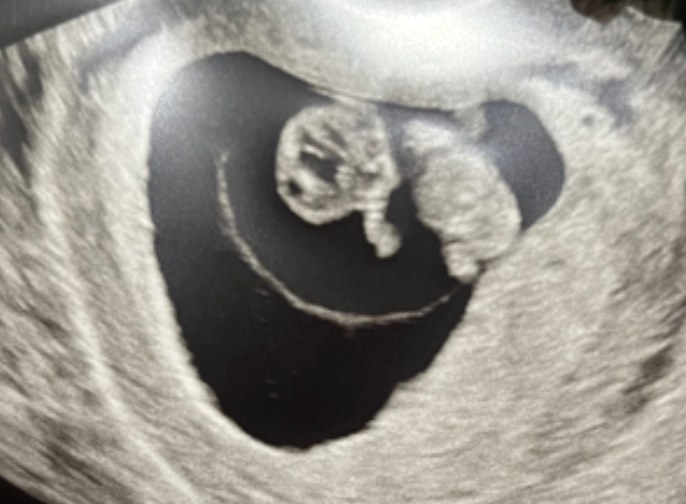
The second verse turns immediately to biology: God “created man from ’alaq”—a clinging substance, a term whose embryological implications we will examine in detail in Chapter 4. The very first factual claim the Qur’an makes about the physical world concerns human embryological development. This is not an accident of sequencing; it is a declaration of intent. The Qur’an is announcing, from its first breath, that it will speak about the natural world—and that what it says can be examined.
ʿAlaq — A Thing That Clings
The third verse repeats the command—Iqra’—and attaches it to a description of God as “the Most Generous” (al-Akram). Generosity, in Qur’anic theology, is not primarily material; it is epistemic. God’s supreme generosity is that He teaches.
The fourth verse makes this explicit: God “taught by the pen.” The pen—al-qalam (القلم)—is the instrument of recorded knowledge, of transmissible learning, of civilization itself. Revelation itself, by the earliest account, began with “good dreams which came true like bright daylight” (Bukhārī 3). Yet when the first revealed passage names how God teaches humankind, it names the pen: the instrument of recorded, transmissible knowledge — of scholarship, of science, of rational inquiry.
The fifth verse completes the thought: God “taught man that which he knew not.” This is a claim about the possibility of genuine discovery—that human beings can come to know things they did not previously know, and that this knowledge ultimately originates from God. The arc of the five verses moves from command (Read) to creation (He created man) to method (He taught by the pen) to result (He taught man what he did not know). It is, in miniature, a complete theory of knowledge.
The Title of the First Surah
There is one more detail worth noting. The surah that contains the first revelation is called Al-’Alaq—a word usually translated “The Clot” or “The Clinging Substance” (from a root meaning to cling or hang; Lane, Lexicon, s.v. ʿ-l-q). Some modern translators render it with embryological wording, though the classical lexicons do not give “embryo” as a meaning. It has 19 verses. It is the 96th surah in the Qur’anic order. And its title names what the second verse says man was created from — the subject of the first evidence chapter of this book.
The Qur’an’s first surah, in other words, is simultaneously a command to investigate, a reference to the natural world, and a signpost to one of the text’s most testable claims. It is as if the book begins by saying: Here is the method. Here is the subject. Now examine.
The Claim to Certainty
The Qur’an does not merely invite investigation. It makes a far stronger claim: that the investigation, if conducted sincerely, will produce yaqīn (يقين)—certainty.
This is not a casual word in Arabic. The Qur’an draws careful distinctions between levels of conviction. Ẓann (ظن) is conjecture or opinion—the Qur’an warns against relying on it: “Most of them follow nothing but conjecture. Certainly, conjecture can be of no avail against the truth” (). Shakk (شك) is doubt. Yaqīn is something else entirely: it is certainty so complete that it admits no residual doubt. And the Qur’an ties its signs to exactly this.
In : “No! If you only knew with knowledge of certainty (ʿilm al-yaqīn)… You will surely see the Hellfire. Then you will surely see it with the eye of certainty (ʿayn al-yaqīn)” (Sahih International). The context is a warning about the hereafter, not a statement of method. Later Islamic scholars took these phrases, together with ḥaqq al-yaqīn (; ), and built a three-level account of certainty out of them: ’ilm al-yaqīn (the certainty of knowledge—like knowing fire burns), ’ayn al-yaqīn (the certainty of sight—like seeing the fire), and ḥaqq al-yaqīn (the certainty of experience—like being burned). The question this book asks is whether the Qur’an’s evidence can take a sincere reader at least to the first level, and perhaps to the second.
In : “We have shown clearly the signs to a people who are certain [in faith]” (li-qawmin yūqinūn; Sahih International). The verse does not say that the signs produce certainty in anyone who glances at them; it says they are clear to those who bring certainty to them — the condition the Qur’an attaches to its signs again and again. Not to the idle, not to the hostile, not to the indifferent. In : “In your own creation and in the creatures He has scattered, there are signs for people of certain faith.” In : “And in the earth are signs for those who have certainty. And in your own selves—do you not see?”
The Qur’an’s epistemological claim is therefore precise: God has placed signs (āyāt) in the natural world, in the text itself, and in the human body, and they are clear to those who bring certainty, reflection and reason to them. Whether they can also carry a reader who begins without certainty toward it is the question the present book takes up.
The Philosopher’s Objection
Before proceeding to the evidence, it is necessary to confront the most fundamental philosophical objection to the Qur’an’s project—one that does not come from any critic of Islam, but from the Western epistemological tradition itself.
David Hume, the eighteenth-century Scottish philosopher, argued that all human knowledge falls into exactly two categories. The first is “relations of ideas”: mathematical and logical truths that are certain by definition. Two plus two equals four. A triangle has three sides. These truths are absolutely certain, but they are empty of factual content—they tell us nothing about the world as it actually is. The second category is “matters of fact”: empirical claims about the world. The sun will rise tomorrow. Water boils at one hundred degrees Celsius. Iron was forged in dying stars. These claims are informative—they tell us about reality—but they can never be certain, because they rest on observation and induction, which can always, in principle, be wrong.
Hume’s argument, known as Hume’s fork, leads to an uncomfortable conclusion: certainty about any factual claim is impossible. You cannot be certain that the sun will rise tomorrow; you can only observe that it has risen every day so far and infer that it probably will again. You cannot be certain that the laws of physics will hold in the next moment; you can only note that they have held in every moment you have observed. If certainty is impossible for claims about the physical world, then certainty about the existence of God—the most profound factual claim imaginable—is, under Hume’s framework, unattainable.
This is not a straw man. Hume’s argument (An Enquiry Concerning Human Understanding, 1748, §IV) has shaped Western philosophy for nearly three centuries. Karl Popper’s falsifiability criterion (Logik der Forschung, 1934) was one influential response to it: since induction cannot prove a general law, Popper argued, science should test hypotheses by trying to refute them, and hold even its best-supported theories provisionally. It is why scientists speak of “theories” rather than “truths.” It is the philosophical air that the modern educated reader breathes, whether they know Hume’s name or not.
And the Qur’an directly challenges it.
The Central Tension
Here, then, is the tension that structures this book. On one side stands the Qur’an, a text that commands investigation and promises that it will yield certainty. On the other stands the most rigorous tradition of Western epistemology, which says that certainty about matters of fact—including the existence of God—is philosophically impossible.
There are only three possible resolutions:
First, the Qur’an is wrong: its promise of yaqīn is an empty one, and examination of its claims will reveal them to be the product of a seventh-century human mind, however gifted.
Second, Hume is wrong—or at least incomplete: there exists a category of evidence that his framework does not account for, a kind of cumulative convergence across domains that can, in fact, produce rational certainty.
Third, both are partially right (and partially wrong): the Qur’an’s evidence is genuinely extraordinary but not coercive, and yaqīn is not a logical proof that compels assent but an interior state achieved through the combination of evidence and sincerity—something closer to what philosophers call “properly basic belief” than to deductive certainty.
This book does not presume to settle the question. It presumes only to conduct the investigation the Qur’an demands.
In the chapters that follow, we will examine the Qur’an’s claims about human embryology, about the structure and origin of the cosmos, about the properties of iron, about the behavior of mountains and seas, about historical events, about its own mathematical structure, and about the nature of its language. In each case, we will present the Qur’anic text, the best available modern science, and the strongest counterarguments. The methodology is the same throughout: rigorous and willing to follow the evidence wherever it leads.
The first revealed word was a command: Read. That is step one. The steps that follow are equally explicit: use the faculties you were given — the hearing, the eyesight, and the fu’ād — to examine what is presented to you. Do not follow what you do not know (). And at the end, choose freely — there is no compulsion in religion. This book applies all of those steps as it examines the Qur’an’s claims. Let us take the text at its word and begin.